
Hello There!
See your building as a living 3D twin you own.
Hello There!
See your building as a living 3D twin you own.
It is the model you own after handover — geometry plus the data that makes each element mean something real.
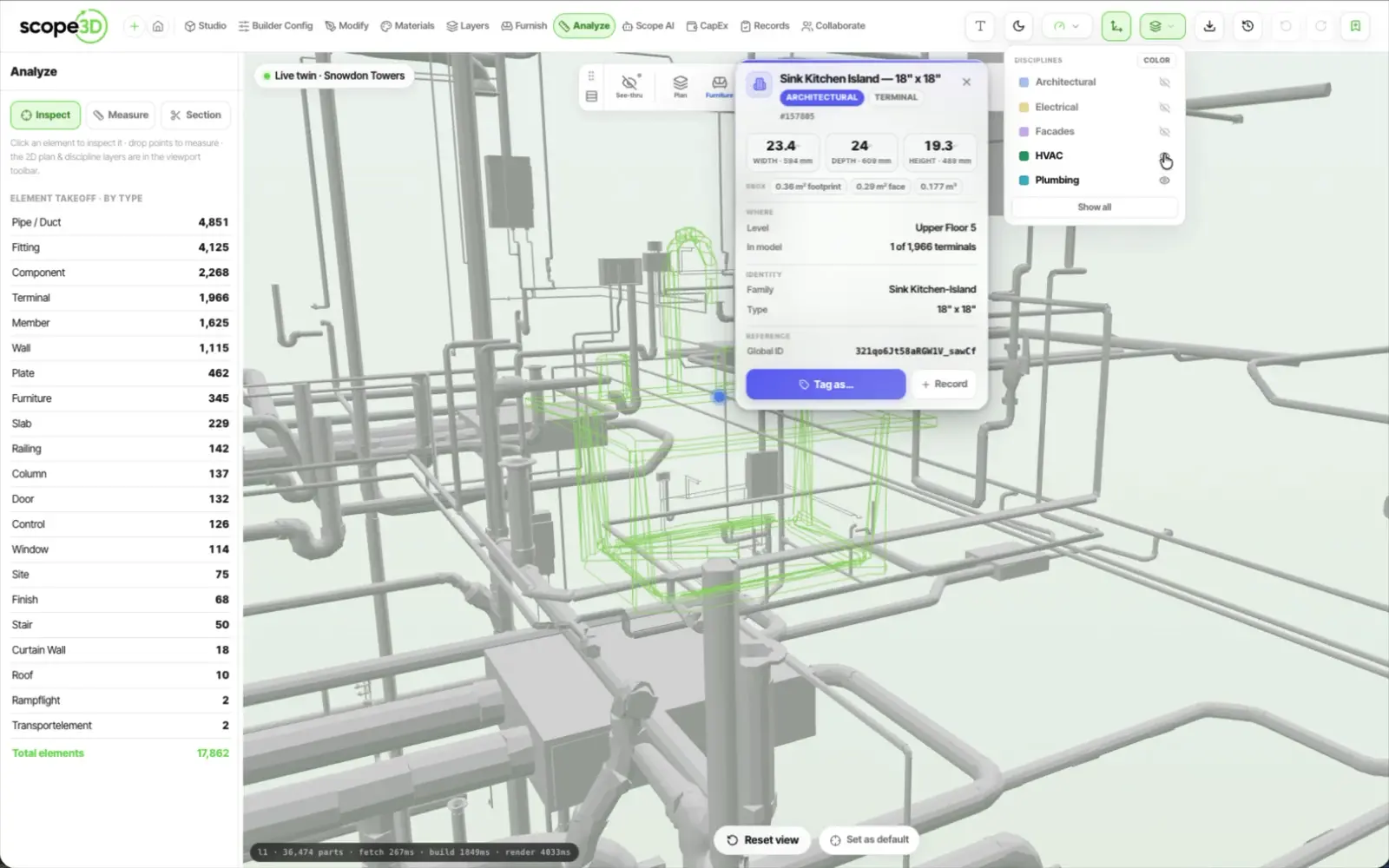
A semantic BIM model is a 3D building model where every element also carries data you can query. A wall is not a slab of triangles that happens to look like a wall — it is an IFC wall, with a type, a storey, a material and a property set attached to it. That is the difference between a picture of a building and a model of one.
Every wall, door, and pump is a real IFC element, not a mesh — so you can select it, price it, tag it and plan its replacement.
Disciplines stay separate inside one twin — toggle the architectural and structural layers off to reveal the plumbing only.
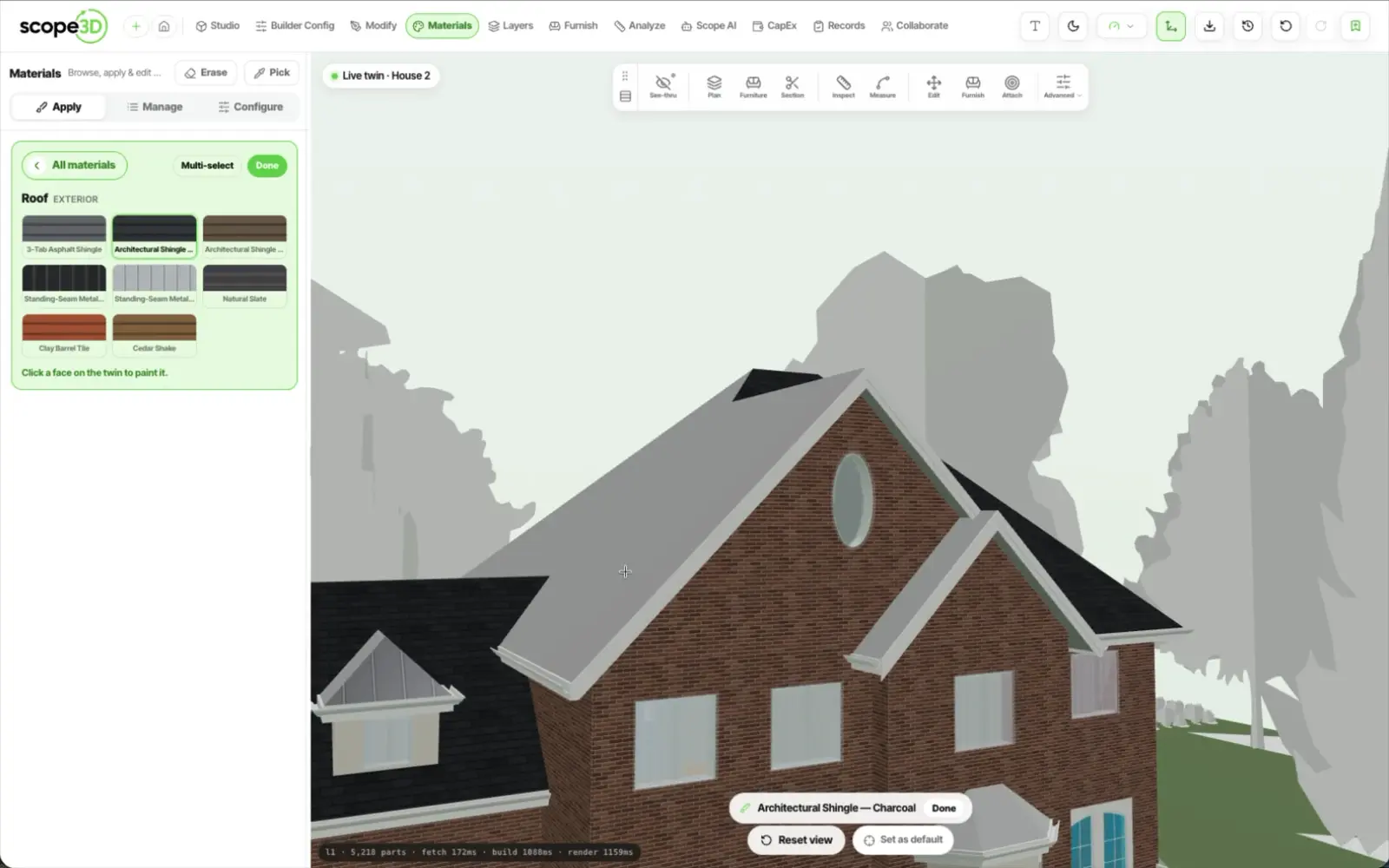
The model is versioned, so any geometry edit you make can be rolled back to any earlier point.
Ownership is the point of it. Your twin — its geometry, its records and its finishes — belongs to you rather than to the design team or the contractor who produced it, and it stays yours for the life of the building. Because the model is semantic, that ownership is worth something: you can ask the building a question instead of asking somebody else for a copy of a drawing.
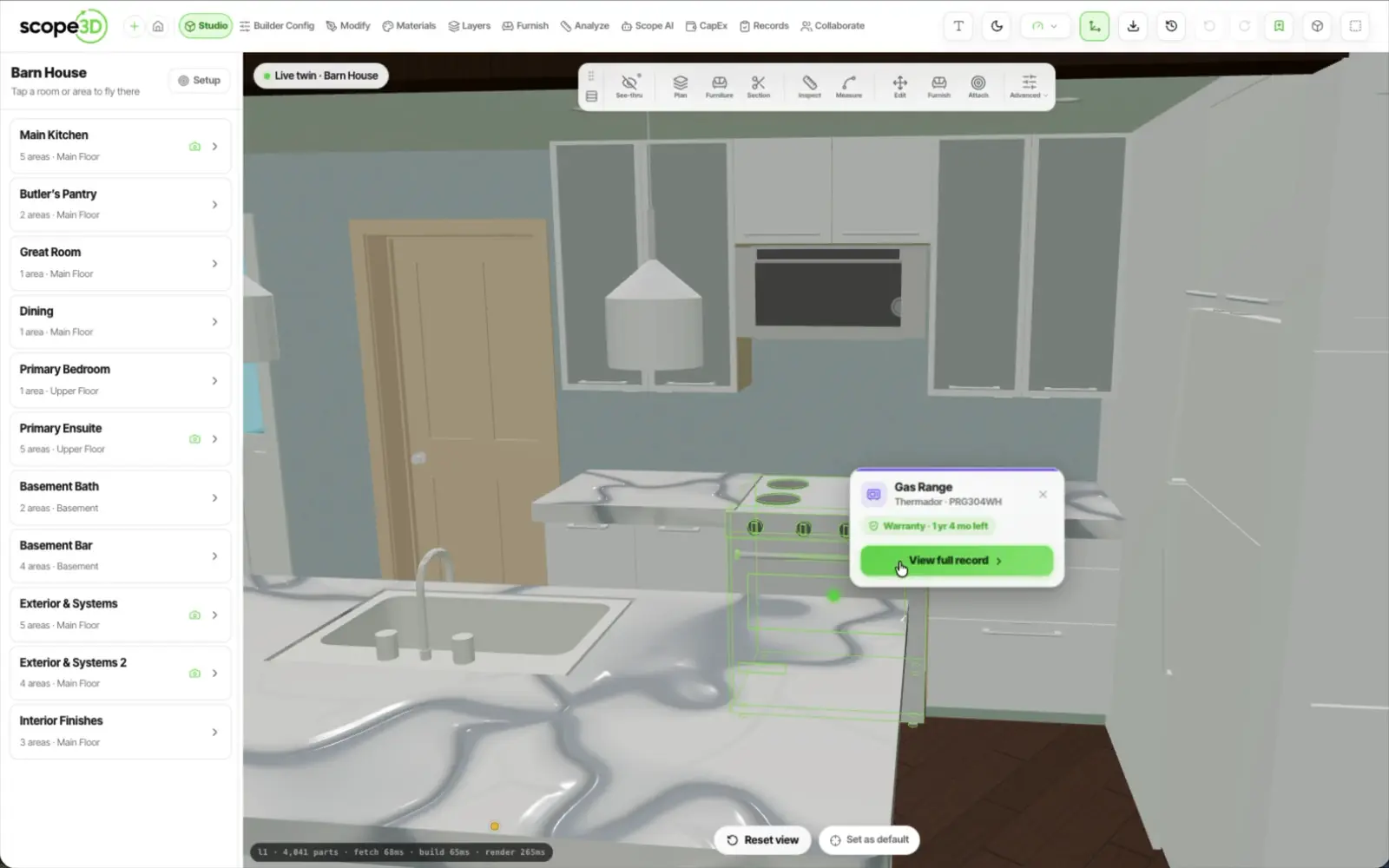
In practice that means quantities come off the building rather than off a spreadsheet, a cost sits against the door or the wall it actually belongs to, and a capital plan can be forecast from install dates and expected life instead of guessed at. Warranties, manuals and certificates hang off the elements they belong to, so nobody has to remember which folder anything was filed in five years and two facilities managers ago.
A mesh model looks much the same on screen and answers none of those questions. You can orbit it, but you cannot select the pump, price the wall, or filter down to the plumbing, because there is no pump, no wall and no plumbing in the file — only surfaces. Every quantity has to be measured again by hand, and every record has to live somewhere else.
The same is true of a drawing set. A folder of PDFs is a snapshot of an intention, not a queryable object, which is why scope, cost, records and tickets drift apart from one another the moment the building is occupied.
Semantic models are what make these Scope3D modes possible: Scope AI pricing, CapEx forecasting, records, and takeoff. Each is a mode on the same twin, so the building is never remodelled to make a different job possible.
Fun fact: IFC has been an open ISO standard since 2005 (ISO 16739), which is why a model you export today can still be opened decades from now—no vendor can lock the building you own behind the file format it shipped in.
Bring the files you already have. We will show you the twin you keep for the life of the building.